Category

未分類

Inquiries from Tokyo

By | 未分類

— A Voice from Diplomatic Clients —

Some of our clients at Dios are diplomats who first serve at consulates in Osaka and later move to Tokyo.

In other words, they begin working at their embassies in Tokyo.

When they relocate to Tokyo, they naturally need to find a new place to live.

However, during this process, many of them encounter the realities of the housing market for foreign residents in Tokyo.


The Housing Situation for Foreign Residents in Tokyo

Currently, housing suitable for foreign residents in Tokyo is in very short supply.

Even when apartments are available, they often lack the level of service many expatriates expect. For example:

  • Furniture and living equipment may be limited

  • Lifestyle services are often minimal

  • Support for foreigners navigating life in Japan can be insufficient

As a result, diplomats and expatriates working for international companies often spend a great deal of time visiting multiple real estate agencies in Tokyo while searching for suitable housing.

Yet, many still find it difficult to locate a residence that truly meets their needs.


Inquiries from Tokyo to Dios

In these situations, we sometimes receive messages from former clients who previously lived in our residences in Osaka.

After moving to Tokyo, they contact us again and ask:

“Is there any service like Dios in Tokyo?”
“Would it be possible for Dios to come to Tokyo?”

Some clients even say:

“There is no real estate service in Tokyo like Dios.”

We are sincerely grateful to hear such kind words.


The Housing Services of Dios

In Osaka, Dios provides housing services specifically designed for expatriates and diplomats.

Our residences are not simply rental apartments.

They include:

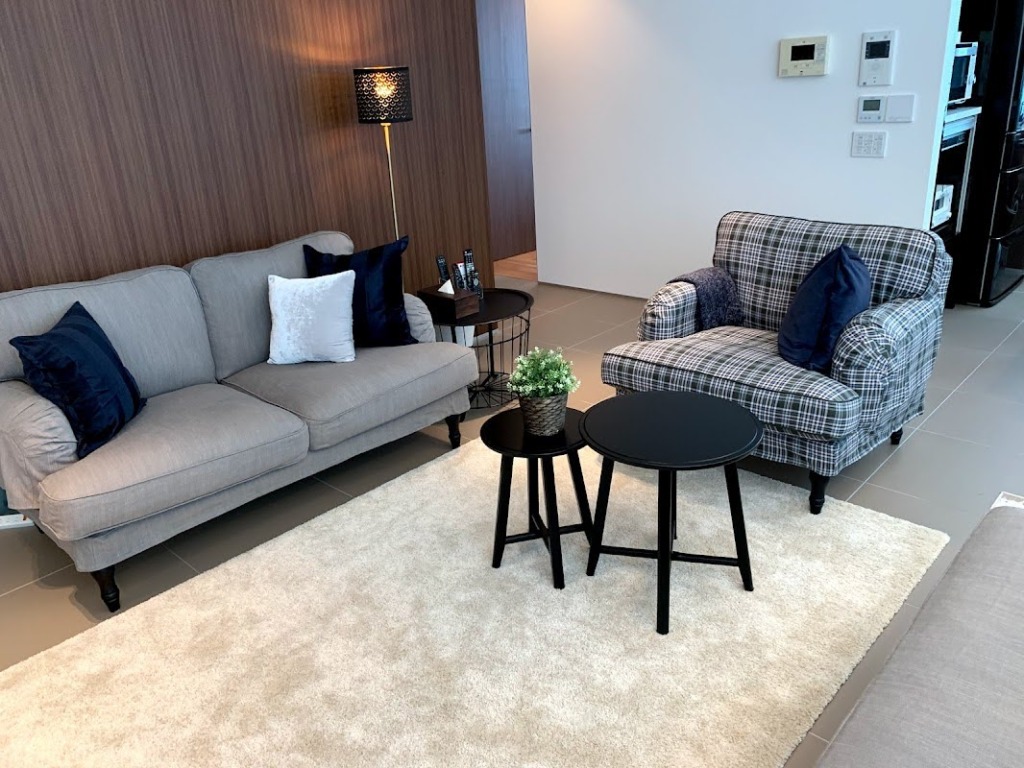
  • Fully furnished housing

  • Cleaning services

  • Lifestyle support

  • Assistance with daily life in Japan

In other words, we provide a comprehensive living support service that allows foreign residents to begin their lives in Japan comfortably from the day they arrive.

It is this level of service that many of our former clients remember when they move to Tokyo.


Osaka as a Living Environment for Foreign Professionals

For international companies entering Japan, the living environment for expatriate employees is extremely important.

From this perspective, Osaka offers many advantages for foreign residents.

These include:

  • A wide range of housing options

  • A comfortable living environment

  • An international community

  • High-quality support services for expatriates

Through our work in Osaka, we have had the privilege of meeting many diplomats and international professionals from around the world.


Gratitude for Our Clients

We are deeply encouraged when clients who once lived in our residences remember their experience and contact us again after relocating.

At Dios, we will continue to focus on providing housing services that support the lives of expatriates in Osaka.

And we sincerely hope that their time in Japan will become a wonderful and lasting experience.

Dios supported three award-winning pavilions at Expo 2025

By | 未分類

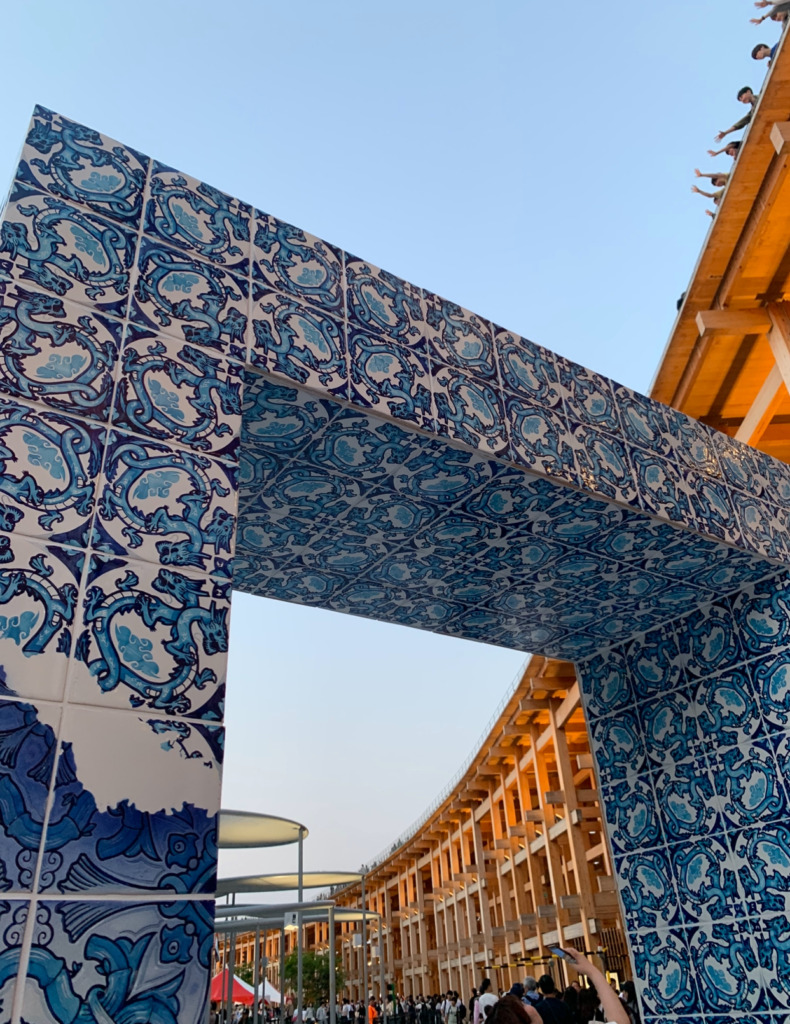
At Expo 2025 Osaka, Kansai, Japan, Dios was honored to contribute to the success of several international pavilions.

We had the privilege of supporting three overseas pavilions — Portugal, Saudi Arabia, and Singapore — whose projects received outstanding recognition in multiple award categories.


🏆 Award-Winning Pavilions Supported by Dios

Best Theme Award

🥇 Gold
Portugal Pavilion Expo 2025 Osaka

🥈 Silver
Singapore Pavilion Expo 2025 Osaka


Best Architecture Award

🥇 Gold
Saudi Arabia Pavilion Expo 2025 Osaka

🥉 Bronze
Portugal Pavilion Expo 2025 Osaka


Best Exhibition Award

🥈 Silver
Saudi Arabia Pavilion Expo 2025 Osaka

🥉 Bronze
Portugal Pavilion Expo 2025 Osaka


Best Large Pavilion Award

🥇 Gold
Saudi Arabia Pavilion Expo 2025 Osaka


Best Medium Pavilion Award

🥈 Silver
Singapore Pavilion Expo 2025 Osaka


Best Activation Award

🥇 Gold
Singapore Pavilion Expo 2025 Osaka


These remarkable achievements were made possible by the dedication and creativity of the teams behind each pavilion.

We would like to express our sincere gratitude to everyone involved, as well as to the many people who supported our work throughout the Expo.


Gratitude for the People We Met at the Expo

One of the most meaningful aspects of Expo 2025 was the opportunity to meet so many international guests and professionals.

Until the very last day of the Expo, we did our best to ensure that the foreign visitors we met could take home their experiences in Japan as a lifelong memory.


Housing for Pavilion Staff During the Expo

For many pavilion staff members, accommodation was arranged through official Expo housing facilities such as the Umeda Residence and Kadoma Residence, prepared by the Expo Association.

However, renting ordinary apartments in Japan can be extremely difficult for foreign residents due to the complexity of the Japanese rental system.

Under these circumstances, the residences provided by Dios became one of the largest privately arranged housing solutions for overseas pavilion staff during the Expo.


International Relationships

Through this experience, we were able to build meaningful relationships with many members of the international pavilions.

They were truly remarkable people.

We are deeply grateful for the opportunity to have met and worked with them.

These encounters are something we will always treasure.

Eliminating Six Months of Expat Life Preparation in Japan

By | 未分類

When expatriates arrive in Japan for a professional assignment, they often face a challenge that has nothing to do with their actual work.

It is the process of setting up daily life.

Purchasing furniture, appliances, and household items.

Arranging deliveries and installations.

Understanding Japanese stores and service systems.

Signing contracts and communicating in Japanese.

All of this takes time — often much more than expected.

In reality, many expatriates spend:

  • Around three months setting up their home after arrival
  • Another three months preparing for departure, selling or disposing of furniture and household items

In total, this can mean six months of effort dedicated simply to managing daily life.

For someone assigned to Japan for two years, that represents a quarter to a third of their entire stay.

And the process is rarely simple.

Because much of it must be done in Japanese, expatriates often rely heavily on their company’s Japanese staff for assistance, creating an additional burden inside the organization.

Dios Eliminates Those Six Months

At Dios, we designed our housing service to solve exactly this problem.

Our fully furnished residences allow expatriates to begin comfortable life immediately upon arrival.

Everything is already prepared:

  • Furniture
  • Appliances
  • Household essentials

In addition, we provide:

  • Cleaning services
  • Lifestyle support
  • Assistance for daily life in Japan

Most importantly, these homes are not temporary or improvised.

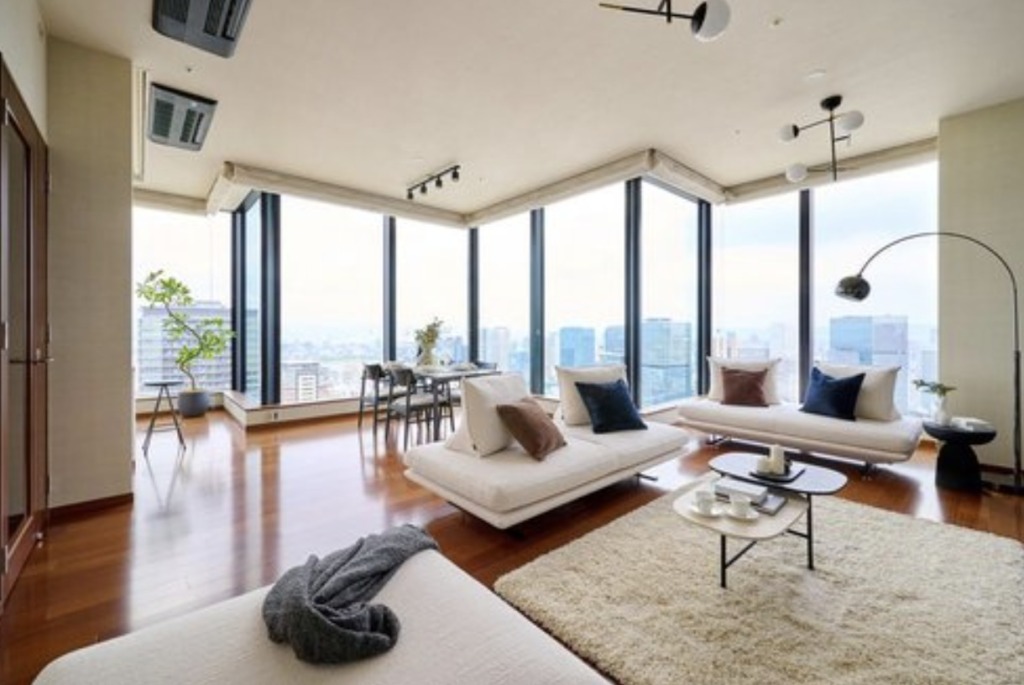
Each residence is carefully arranged by a professional interior coordinator, creating a living space that is both functional and beautiful.

Time Is Money — But Time Is Also Life

In business we often say:

“Time is money.”

But in reality, time is something even more valuable.

Time is life itself.

By removing the logistical burden of setting up and closing down a home, Dios allows expatriates to focus on what truly matters:

  • their professional mission in Japan
  • their families
  • their experience of life in Kansai

Dios does not simply provide apartments.

We provide something far more valuable.

We return time to our clients’ lives.

The Era of Information Monopoly Is Over — Now It’s the Era of Design Capability

By | 未分類

A client once believed that requesting property searches from multiple real estate agencies would increase options and therefore lead to a better result.

At first glance, this seems logical.

However, in practice, it did not produce the optimal outcome.

Why?


1️⃣ Japan’s Real Estate Industry Operates on a Shared Database

In Japan, licensed real estate brokers operate through a shared property distribution system called REINS (Real Estate Information Network System), administered by regional real estate transaction organizations.

This system allows brokers to share available residential property information across the market.

Twenty Years Ago Was Different

Before the development of internet-based systems — or in countries where the brokerage industry is not well organized — property information was fragmented. Individual agencies often possessed limited, localized data.

In such environments, contacting multiple agencies was rational.

But modern Japan is different.


2️⃣ Agency A and Agency B Basically Have Access to the Same Information

Through REINS, licensed brokers generally access the same pool of available residential properties.

Therefore, the assumption that:

“More agencies = More property information”

does not hold true in today’s Japanese housing market.

The competitive edge no longer lies in information ownership.


3️⃣ Multiple Agencies Create Information Management Costs for the Client

When a client works with several agencies simultaneously, the client must personally manage:

  • Duplicate property proposals

  • Application priority tracking

  • Communication of condition changes

  • Viewing schedule coordination

If this management is imperfect, disadvantages may arise:

  • Losing application priority

  • Weakened negotiation position

  • Miscommunication of requirements

These are invisible costs — and they are borne by the client.


4️⃣ Portal Site Listings Are Not Confirmed Availability

Public platforms such as:

SUUMO
LIFULL HOME’S

are convenient tools for searching.

However, they may contain:

  • Time lags after properties are taken

  • Already-applied units

  • Outdated conditions

Professional brokers can:

  • Call property management companies directly

  • Confirm real-time application status

  • Negotiate directly with owners

Individual consumers cannot easily perform these confirmations themselves.


5️⃣ The Information Monopoly Model No Longer Exists

Historically, real estate was structured around one principle:

“Those who control information win.”

Today, that structure has disappeared.

Property information is shared.
Exclusivity is structurally limited.
The idea that one company possesses unique residential inventory does not generally apply in Japan.

In residential leasing,

“Only this company knows this property”

is, in most cases, a myth.


So What Is the True Value of a Real Estate Broker Today?

It is not the volume of listings.

It is:

  • The ability to clarify and structure client conditions

  • The ability to filter appropriately

  • The ability to listen accurately

  • The ability to execute reliably

  • Negotiation capability

  • And post-move-in service support


Dios’ Position

Dios has access to the same market-wide property information available to other licensed brokers.

If a client asks,

“Does this property exist?”

we do not answer from the perspective of:

“Is it ours?”

We answer:

“Is it available in the market?”

In today’s environment, information is shared.

What differentiates firms is not access — but capability.

However, this is crucial:

Dios’ core business is not merely property searching.

A typical brokerage’s service ends at key handover.

Dios’ service begins there.

We focus on:

  • Furniture coordination

  • Cleaning and maintenance

  • Ongoing support

  • Exit procedures

  • Repatriation assistance

Housing is not a transaction.

It is an infrastructure for living.


Conclusion

In modern Japan:

Multiple agencies ≠ More information

On the contrary,

Working exclusively with one carefully selected professional leads to better results.

Especially with Dios, exclusive engagement allows us to design properly, coordinate efficiently, and act decisively.

In the internet era, information is shared — not monopolized.

The difference lies in one question:

Who do you design your living strategy with?

Dios is not simply a brokerage.

We are a long-term living infrastructure partner, walking with our clients beyond the contract.

The Decision Principles of Dios

By | 未分類

What guides our judgments

The work of Dios is built upon countless small decisions made each day.

When selecting a property.

When adjusting contractual terms.

When addressing disputes.

When declining an inquiry.

Each decision is guided by a consistent set of principles.

This page sets out those principles clearly.

Accuracy over speed

We choose accuracy over speed.

During Expo 2025 Osaka–Kansai,

Dios coordinated large-scale furniture deliveries and removals for numerous international residences within tight timelines.

We are capable of operating at speed when necessary.

However, we do not advance to the next step carelessly or ambiguously.

When explaining contracts, facilities, or conditions, we take the time required to understand the structure, organize the terms, and communicate with technical precision.

Speed is a capability.

Accuracy is a responsibility.

Long-term trust over short-term profit

Even when immediate profit is available,

we do not make decisions that could undermine future trust.

Dios does not operate on a “just this once” mentality.

What we value are relationships that can be explained and respected:

  • Ten years from now
  • Twenty years from now

We do not pursue short-term gain.

We build what we call trust capital.

Structure before emotion

In practice, situations can become emotionally charged.

When that happens, we first clarify:

  • Facts
  • Contracts
  • Conditions
  • Legal frameworks
  • Timelines

We do not deny emotion.

We ensure that decisions are not controlled by it.

Our approach is to create structure that allows fairness and clarity to prevail.

Sustainability over expansion

Growth is not our primary objective.

We do not:

  • Accept more projects than we can responsibly manage
  • Expand beyond the scope where we can assume full accountability
  • Pursue scale at the cost of quality

We prefer steady, sustainable development over rapid expansion.

Integrity

Integrity is not merely kindness.

It means:

  • Explaining unfavorable terms when necessary
  • Declining work that falls outside our principles
  • Acknowledging errors when they occur

Integrity may occasionally cost us in the short term.

In the long term, it strengthens trust.

Trust is accumulated, not declared

Trust cannot be announced into existence.

It is built through:

  • Daily decisions
  • Small commitments kept
  • Accountability consistently demonstrated

Modern economic development depends on:

  • Contract-based systems
  • Governance
  • The rule of law

Osaka has a long history of credit markets, including the Dojima Rice Exchange, one of the earliest organized futures markets in the world.

Dios operates within this tradition of contractual reliability and disciplined trust.

Our role is modest:

to ensure that each individual agreement we manage contributes, in its small way, to a stable and trustworthy international environment.

Warm consideration

Structure and law alone do not create stability.

What completes them is consideration.

We strive to understand:

  • Language barriers
  • Cultural differences
  • The concerns of families living abroad

And to reduce that burden wherever possible.

This spirit of warm consideration is part of our foundation.

A final question we ask ourselves

We regularly ask:

Can this decision be explained clearly ten years from now?

If the answer is no, we do not proceed.

This is our final standard.

In closing

The principles of Dios are not extraordinary.

They are simple:

  • Accuracy
  • Long-term trust
  • Structure
  • Sustainability
  • Integrity
  • Credibility
  • Consideration

What is difficult is not defining them,

but consistently living by them.

We intend to continue doing so.

That is the foundation of Dios.

How Dios Works

By | 未分類

On quiet professionalism as a working philosophy

Dios does not operate in a loud or dramatic manner.

We do not rely on aggressive sales tactics or forceful persuasion.

Instead, we practice a form of work that is structured, transparent, and explainable.

This is what we consider quiet professionalism.

We do not pressure decisions

At Dios, we do not:

•Rush clients into selecting a property

•Create artificial urgency through comparison

•Push contracts toward rapid conclusion

A residence is not something to be decided hastily.

It is the foundation of long-term living.

We have confidence in the quality of our services.

However, we do not demonstrate that confidence through volume or insistence.

We prepare the necessary information carefully, and we allow our clients to make decisions at their own pace.

We prioritize careful explanation

Japanese rental agreements involve practices that may not be immediately clear to foreign residents.

These include:

•Restoration obligations at move-out

•Guarantor systems

•Notice periods for termination

•Deposit settlement structures

Without cultural context, these elements can be difficult to interpret.

Dios maintains a strong understanding of Japanese rental law and practice.

We provide English explanations of contract terms, and when necessary, we clarify disputes or uncertainties based on Japanese legal principles.

Our goal is to ensure that our clients are never disadvantaged by lack of information.

We document clearly

Verbal reassurance alone is not sufficient.

We work to clarify:

•Contract conditions

•Special clauses

•Exit procedures

•Cost structures

as precisely as possible.

We do this so that every arrangement can be explained clearly, even years later.

Professional responsibility requires documentation that withstands time.

We do not conceal risks

Every property has both strengths and limitations.

We do not present only the favorable aspects.

We also explain:

•Location considerations

•Building age and structure

•Future renewal conditions

•Characteristics of the surrounding environment

Trust is not built by selective disclosure.

It is built by full and honest communication.

We design the entire living structure

Dios does not limit its work to property introduction.

We consider the broader living framework, including:

•Furniture and interior coordination

•Daily living flow and usability

•Access to schools, medical services, and transportation

•Ongoing residential support

•Departure logistics and asset disposition

When foreign professionals relocate to Japan,

purchasing furniture independently and disposing of it upon departure can require significant time and effort.

Time invested in these matters is time not invested in professional responsibilities.

Our relocation support and departure assistance aim to substantially reduce this burden.

Well-maintained environments, refined interior arrangements, and carefully organized living spaces have consistently been appreciated by our clients.

We maintain this quality not through exaggeration,

but through accumulated experience and disciplined practice.

Quiet, but reliable

Diplomats and senior international professionals do not seek spectacle.

They seek:

•Stability

•Accuracy

•Consistency

•Professionalism

The work of Dios is not widely advertised.

Yet it has been recognized by diplomatic clients and international institutions as reliable and dependable.

Our reputation has not been built on volume,

but on outcomes.

In closing

The essence of our work is:

Accuracy over speed.

Depth over breadth.

Continuity over momentum.

We are a company that builds trust through structured, explainable practice.

That is the working philosophy of Dios.

Why Dios Does This Work

By | 未分類

On housing as a foundation for trust and international life

Dios is a real estate company.

Yet what we truly work with is not property itself, but the uncertainty, responsibility, and human reality faced by foreign residents living in Japan.

Housing in Japan is not simple for foreign residents

For diplomats and expatriates, securing housing in Japan often involves more complexity than expected.

There are differences in:

  • Contract practices

  • Legal frameworks and guarantor systems

  • Language and communication styles

  • Expectations regarding restoration and exit procedures

  • Interior design and living standards

What feels routine to Japanese residents can become a significant source of stress for foreign professionals.

Over decades of practice, we have witnessed how these invisible barriers affect people’s lives.

Housing is not separate from diplomacy or leadership

For diplomats and senior international professionals, housing stability is not merely a personal matter.

It directly influences:

  • Professional focus

  • Family well-being

  • Institutional credibility

  • Bilateral and corporate relationships

When housing is uncertain, even highly capable individuals cannot perform at their best.

Dios believes that ensuring a stable living foundation is a quiet but essential part of international engagement.

We work with lives, not empty units

Dios does not simply introduce empty properties.

We work with the structure of daily life, including:

  • Furniture and interior planning

  • Functional living flow

  • Cultural adaptation

  • Long-term residence management

  • Departure logistics and asset disposition

Our ideal outcome is simple:

A client can arrive in Japan with a single suitcase
and depart in the same way.

Behind that simplicity lies careful preparation, coordination, and ongoing support.

Reducing friction across cultures

Through housing, we seek to reduce friction between:

  • Language and language

  • Country and country

  • Culture and culture

This work is not visible from the outside.
It is rarely dramatic.

But when friction is reduced, relationships function naturally.

Housing becomes more than a contract.
It becomes part of a stable international relationship.

Why we continue

Dios does not do this work for short-term financial gain.

We continue because:

  • Long-term trust matters

  • Accountability matters

  • Decisions must be explainable even decades later

The principles that guided us thirty years ago continue to guide us today.

In closing

Housing is not simply a structure.

It is a foundation for responsibility, credibility, and human connection.

Dios exists to quietly support that foundation for diplomats and expatriates in Japan.

That is why we do this work.

And that is why we will continue to do it.

Who Dios Is For

By | 未分類

On defining our clients with clarity and responsibility

Dios is not a company for everyone.

From the beginning, we have clearly defined who we serve.
This is not a limitation—it is a responsibility.

The people we support

Dios primarily serves:

  • Diplomats and staff of embassies and consulates

  • Executives and assignees of foreign-owned corporations

  • International professionals and expatriates

What these individuals often share is:

  • Limited familiarity with the Japanese language

  • Limited experience with Japanese contractual practices

  • A professional position where stability and credibility are essential

  • A long-term stay, often with family

We specialize in supporting the living foundations of those in such positions.

Why we limit our clientele

In many industries, growth is associated with serving more people.

Dios has chosen a different path.

We believe that responsibility deepens when focus narrows.

Housing for diplomats and expatriates requires:

  • Understanding of cultural and contractual differences

  • Sensitivity to diplomatic and corporate schedules

  • Careful consideration of family structures

  • Interior environments suitable for international lifestyles

  • Long-term reliability rather than transactional speed

To provide this level of support, we must limit the scope of who we serve.

“Not for everyone” is a deliberate choice

Dios is not a company that welcomes every type of inquiry.

This does not mean we are exclusive in attitude.
It means we are clear about where we can take full responsibility.

We are not well suited for:

  • Clients focused primarily on lowest cost

  • Short-term profit-driven objectives

  • Purely investment-oriented transactions

However, we are deeply aligned with those who value:

  • Long-term stability

  • Transparent agreements

  • Professional accountability

  • Constructive relationships with Japan

Experience and continuity

During Expo 2025 Osaka–Kansai,
Dios supported housing for participants from multiple countries and regions.

This was not the result of aggressive expansion.
It was the result of consistent specialization.

Looking ahead to Osaka’s International Financial City initiatives and broader international development,
we aim to continue supporting foreign professionals who contribute to Osaka’s global presence.

Our role is not to expand broadly,
but to remain steady where responsibility is highest.

Defining our clients is defining our responsibility

Corporate maturity is not about the number of clients one can serve.

It is about knowing clearly for whom one assumes responsibility.

Dios is a company dedicated to supporting the lives of diplomats and expatriates in Japan.

If you represent a government, an international organization, or a global corporation—and you seek stability, clarity, and long-term partnership—Dios may be the right partner for you.

If your objectives lie elsewhere, that is perfectly acceptable.

Clarity is not exclusion.
It is integrity.

What Dios Does Not Do

By | 未分類

On strategic focus and non-core fields

Dios is a real estate company.

However, we have not grown by expanding the range of services we can provide.
On the contrary, we have built trust by clearly defining what we do not do.

This page outlines the areas that Dios does not handle, so that our position is understood from the outset.

Our field of focus

For over thirty years, Dios has consistently specialized in housing support for:

  • Foreign government institutions

  • Diplomats and consular staff

  • Foreign-owned corporations

  • International executives and expatriates

As a result of this clear specialization, we do not engage in:

  • Commercial property transactions

  • Hotel or resort acquisitions

  • Investment-focused real estate brokerage

  • High-yield property introductions

  • Short-term speculative transactions

These are not “bad” businesses.
They are simply not aligned with the mission of Dios.

Why we do not handle those fields

The reason is straightforward.

Dios is not a company that merely intermediates property.
We are a company that supports people’s lives.

Investment transactions typically revolve around:

  • Yield

  • Price

  • Turnover speed

  • Capital efficiency

In contrast, the work Dios undertakes revolves around:

  • Trust

  • Stability

  • Long-term relationships

  • Accountability

These two types of work are fundamentally different in nature.

Our strategy is concentration

In the real estate industry, versatility is often seen as a strength.
“Anything is possible” can be an appealing message.

Dios has chosen the opposite path.

We concentrate exclusively on:

  • Diplomats

  • Consular officials

  • International corporate executives

  • Expatriates

To specialize is to have the courage to decline other opportunities.

This focus allows us to go deeper rather than broader.

Regarding commercial or investment inquiries

From time to time, we receive inquiries such as:

  • “Are there any hotel acquisition opportunities in Osaka?”

  • “We are looking for a shopping mall investment.”

  • “Do you handle large-scale commercial projects?”

In such cases, we respond respectfully but decline.

We do so because:

  • We do not step into fields where we lack full expertise.

  • We do not undertake work for which we cannot assume full responsibility.

  • We do not allow strategic misalignment to dilute our focus and judgment.

We believe this discipline ultimately serves our clients’ best interests.

Clarity builds trust

The strength of Dios lies not in breadth, but in depth.

Over decades, we have developed expertise in:

  • Understanding foreign contractual expectations

  • Explaining Japanese housing practices across cultures

  • Designing refined interior environments suitable for international residents

  • Structuring complete living environments

  • Providing attentive support during residence

  • Managing smooth transitions upon departure

This depth exists because we did not divide our attention across unrelated sectors.

If we had pursued commercial investments and large-scale transactions alongside our core work,
this depth would not have been possible.

Strategy begins with what you refuse

Corporate maturity is not defined by the number of things a company can do.

It is defined by the clarity of what it chooses not to do.

Dios consistently chooses:

  • Long-term trust over short-term profit

  • Responsibility over expansion

When an opportunity falls outside our strategic focus,
we decline it quietly.

This is not hesitation.
It is a deliberate and responsible decision.

In closing

Dios is not a company that operates across all sectors of the real estate industry.

We are specialized in supporting the lives of diplomats and expatriates in Japan.

By clearly defining what we do not do,
we believe we demonstrate that we are a company that can be trusted with what truly matters.

This stance will not change.

About Dios

By | 未分類

Quietly supporting the lives of diplomats and expatriates in Japan

Dios is a real estate company.
However, we operate from a position that is somewhat different from what is usually imagined as “a real estate company.”

What we handle is not merely property.
We work with the lives and trust of foreign nationals, diplomats, and internationally active professionals living in Japan.

Although we are a licensed real estate operator,
we do not consider ourselves simply a “real estate agency.”

Dios is a company that provides comprehensive living support services for foreign residents in Japan—
helping them begin their lives smoothly, live with dignity, and leave Japan with the same ease.

For this reason, our services are fundamentally different from conventional rental arrangements that assume empty, unfurnished properties.

A home is more than a physical space

For foreign residents and diplomats in particular,
housing in Japan directly affects their long-term lives in ways that go far beyond accommodation:

  • Stability in professional duties

  • Safety and comfort for family members

  • Trust and credibility as representatives of a country or organization

  • The quality of diplomatic and international relationships with Japan

  • A meaningful and positive cross-cultural life experience

Dios deliberately chooses work that allows us to engage responsibly and sincerely over the long term,
rather than projects that prioritize short-term profit.

Who Dios exists for

Our clients are clearly defined.

  • Diplomats and staff of embassies and consulates

  • Executives and assignees of foreign-owned companies

  • International professionals working across borders

Dios is not a company that serves everyone.
By limiting who we serve, we are able to maintain a high level of responsibility and care for each client.

We exist for those who value understanding, trust, continuity, and a constructive relationship with Japan—rather than price or luxury alone.

During the Expo 2025 Osaka–Kansai, Dios supported housing for international participants from multiple countries and regions.

Looking ahead to 2030, as integrated resort development and Osaka’s International Financial City initiative advance, we aim to work alongside stakeholders to create an environment where international schools and high-quality living conditions support Osaka’s growth as an open and globally attractive city.

Why we do this work

We do this work because, for foreign residents and diplomats, housing in Japan presents uniquely high barriers.

These include:

  • Differences in business customs and legal frameworks

  • Language and cultural gaps

  • Contractual conditions that differ from global standards

  • A lack of housing designed for foreign lifestyles and interiors

  • The significant time and effort required to set up daily life

Through housing, Dios seeks to quietly reduce the friction that arises between:

  • One language and another

  • One country and another

  • One culture and another

In addition, the burden placed on foreign residents—from initial life setup upon arrival to the disposal of furniture, appliances, and relocation upon departure—is far from minor.

Dios provides an environment where clients can arrive in Japan with a single suitcase and leave the same way.
We consider this to be a service of substantial and lasting value.

We are not a company that merely provides empty high-end properties.

Dios works with real estate, interior environments, quality of life, significant reductions in time and effort, and above all, the beauty of human relationships between our clients, the local Japanese community, and our team.

How we work

The way Dios works is intentionally quiet.

  • We do not push sales

  • We do not rush decisions

  • We do not encourage superficial comparisons

Instead, we:

  • Provide careful explanations

  • Prepare clear and accurate documentation

  • Communicate risks honestly

What diplomats and international professionals seek is not speed, but professionalism and certainty. We do not recommend what we cannot clearly explain, and we do not enter into contracts that our clients cannot fully accept.

Our decision-making principles

Our principles are consistent across all decisions.

  • Accuracy over speed

  • Long-term trust over short-term profit

  • Structure over emotion

  • Sustainability over expansion

  • Integrity

  • Credibility

  • A genuine spirit of care and consideration

We do not make decisions that we cannot explain in the future.
These principles are what have sustained relationships lasting ten or twenty years.

In closing

This article is not written for sales purposes.
It serves as a guide to understanding who Dios is and as a framework to prevent misunderstanding.

Everything written here forms the foundation for our decisions and actions.

From this overview branch five more detailed articles, and beyond them, hundreds of observations drawn from daily practice.

Dios is a company that quietly and patiently builds trust over time.